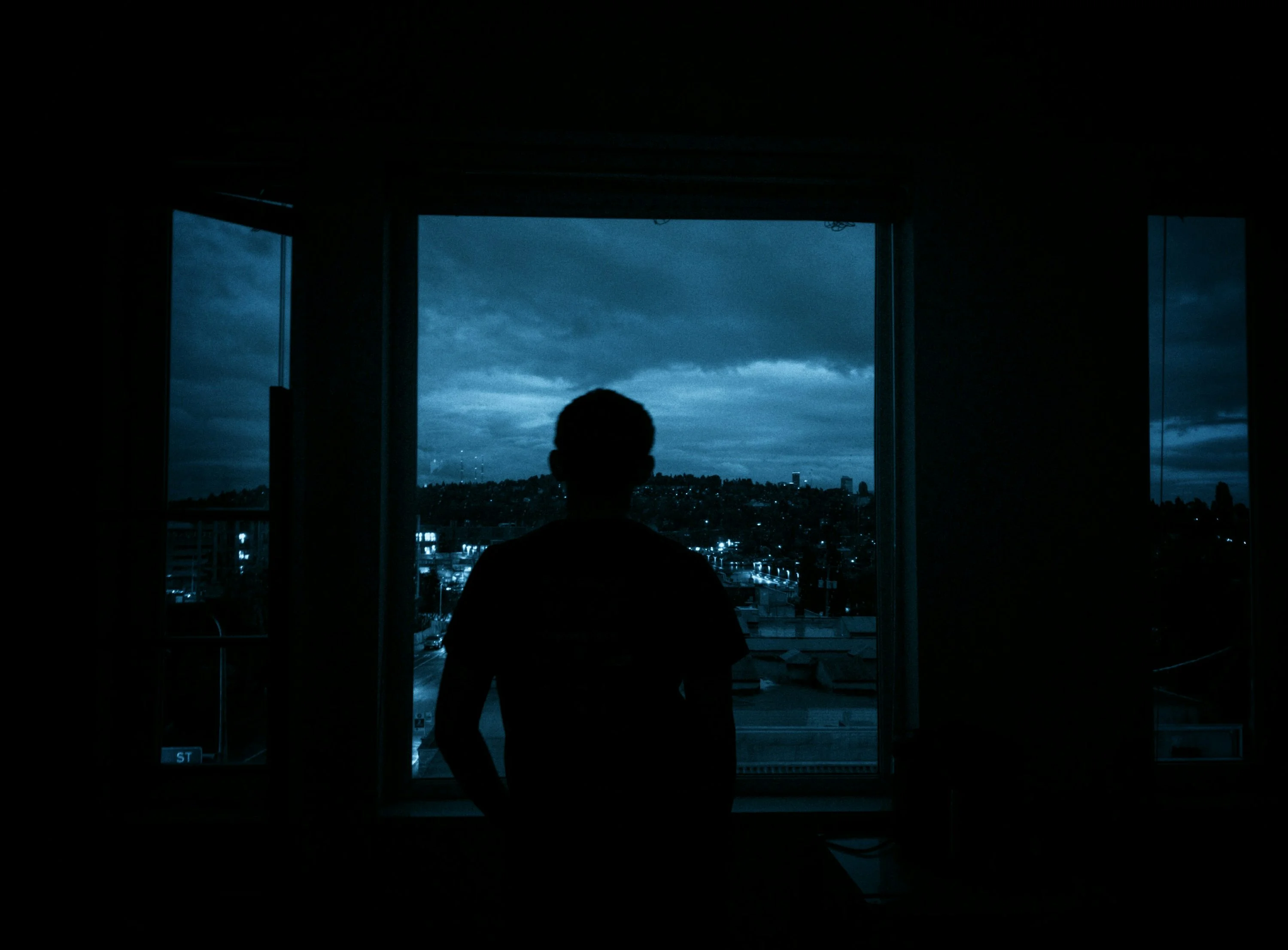
It is 3:14 a.m. on a Tuesday.
You are wide awake, staring at a ceiling you have now memorized. Your body is flat and still, but your mind is running tomorrow’s board update on a loop — every sentence, every possible pushback, every way it could go wrong.
You have tried the breathing app. You have tried the gratitude journal. You have tried the 4-7-8 that TikTok said would change your life. And yet here you are again at 3:14 a.m., running mental simulations your body cannot stop producing.
The strange thing? Your day went *well*. The pitch landed. Revenue is up. The team is performing. By every outward measure, you are winning.
So why does your body feel like it is losing?
If you have been treating burnout as a time-management problem, a mindset problem, or a willpower problem, there is something important you need to know: you have been solving the wrong problem. Burnout is not a problem your thinking brain can fix, because your thinking brain is not the one that is broken.
Burnout is a nervous-system problem. Until your body feels safe, no strategy will stick. Not the journal. Not the new calendar system. Not the 5 a.m. cold plunge. Not even the coach on retainer.
This article is the one I wish every exhausted high-performer read before they tried "one more productivity hack." In the next few minutes you will learn why cognitive fixes plateau, the four nervous-system states you actually spend your day cycling through, why willpower is the wrong tool for this job, and the five-minute rewiring protocol that sits underneath every phase of the R.E.S.E.T. Framework.
Section 1: The Myth of "Just Think Differently"
High-achievers are taught that any problem is solvable if you think hard enough. That is the story your career is built on. So when burnout starts to creep in, you default to the same tool you have always used: more thinking.
You download another productivity book. You start a new morning journaling practice. You sign up for an online course on stoicism. You promise yourself that this quarter you will "reframe" the stress.
And for a while, it seems to help. You feel a flash of clarity, a spike of motivation, maybe even a good night’s sleep. Then — three weeks later — you are back in the same loop. You know all the right things. You feel none of them.
This is not because you are lazy. It is because you are trying to install software on hardware that is malfunctioning.
Why journaling and mindset work plateau
Insight without regulation produces *awareness* of your burnout, not *recovery* from it. You see the pattern more clearly, which actually makes it more painful — because now you know, and you still cannot change. You were never going to think your way out of a state your body is physically locked into.
The cortisol loop no one tells you about
Chronic stress does something specific to your brain: it teaches your amygdala (the threat-detection system) to treat neutral inputs as dangerous. An unread email becomes a threat. A silent phone becomes a threat. A long weekend with nothing to do becomes a threat.
Your cortisol stays elevated even when you are "resting" because your nervous system is no longer scanning for tigers — it is scanning for *anything*. And once that system is dysregulated, the thinking brain goes offline first. That is why you cannot seem to focus on the book you bought to fix your focus.
Signs this is happening to you
- Sunday evening dread that starts around 5 p.m. and refuses to be reasoned with
- Heart rate that climbs before every Zoom, even the easy ones
- Brain fog that hits around 4 p.m. and makes reading emails feel physically heavy
- An inability to sit still on holiday — your body refuses to switch off, even when your calendar says it is allowed to
- Micro-irritations that feel disproportionate (the cutlery left out, the slow email reply, the printer jam)
Why successful people are the worst at noticing it
Achievement releases dopamine, which feels like vitality. But dopamine is not the same as being well. You can be dying of thirst while drinking salt water, and this is exactly what high-performers do for years — chasing the next hit of accomplishment because it briefly masks the physiological deterioration underneath. By the time the body finally forces the conversation (through illness, a panic attack, a marriage in crisis), you have been running on fumes for much longer than you realized.
Section 2: The Four States of Your Nervous System
To understand why you feel the way you feel, you need a rough map of what is happening in your body. We are going to borrow from polyvagal theory (developed by neuroscientist Dr. Stephen Porges) and strip it down to four states that every six-figure professional cycles through every day.
State 1 — Ventral Vagal (Regulated)
This is the state where freedom, creativity, intimacy, and actual joy live. Your breathing is slow and easy. Your shoulders are down. You can listen without formulating your response. You can receive a compliment without deflecting. You can sit in silence and not feel uncomfortable.
Most six-figure professionals have not visited this state in years. Some have never been there as adults. It is not a mood or a personality trait — it is a physiological baseline that you can return to, with training.
State 2 — Sympathetic Activation (Fight / Flight)
This is the state that built your career. Heart rate up. Urgency on. Coffee in hand. Brain scanning for threats, deadlines, opportunities. This is the state most executives mistake for "ambition."
The problem is not that it exists — it is *useful* — it is that you are stuck in it. Sympathetic activation is meant to be a brief sprint, not a lifestyle. When you live in this state for years, your body starts to corrode: sleep breaks down, digestion breaks down, immunity breaks down, relationships breaks down.
State 3 — Dorsal Vagal Shutdown (Freeze / Collapse)
When the body has been in sympathetic for too long and cannot keep it up, it crashes into dorsal vagal. Think of this as the body’s emergency brake.
Surface symptoms look like: scrolling Netflix for three hours without really watching anything, emotional numbness, the "I do not care anymore" that worries your partner, paralysis at your own desk, the weird inability to reply to a text you have been meaning to answer for six days.
Most high-performers misread this as laziness or depression. It is neither. It is a physiological protection mechanism.
State 4 — Functional Freeze (The Executive’s Default)
This is the most insidious one, and it is where most readers of this article live. Functional freeze looks like: you are on camera, you sound articulate, you deliver the presentation, you smile at the right moments — and inside, you are flatlined. You cannot feel anything. You cannot remember what you ate for lunch. You are "fine" in the way someone in shock is fine.
This is the state I was in at 8:47 p.m. at my own kitchen counter, eating dinner out of a plastic container, after my nephew Myles had gone to bed without seeing me again. From the outside, everything looked fine. From the inside, nothing was reaching me.
Self-audit: which state did you spend yesterday in?
Ask yourself:
1. Did I notice my breath at any point yesterday?
2. Did I sit in silence (no podcast, no music, no phone) for more than five minutes?
3. Did I feel *anything* that surprised me — laughter, tenderness, awe?
4. Did my body soften at any point, or was it braced the whole day?
5. Did I sleep because I was tired, or because I collapsed?
6. How much of my day was spent in a state I would actually choose?
Whatever the answers, do not judge them. They are data, not evidence of failure.
Section 3: Why Willpower Is the Wrong Tool
Here is the cruel joke of burnout: willpower — the thing that got you this far — is a *function of* a regulated nervous system. It is not independent of your biology. It lives downstream of it.
When your nervous system is in ventral vagal (regulated), willpower is cheap. You can wake up at 5 a.m., run five kilometres, write a thousand words, and still be kind to your kids at breakfast. It feels like discipline. It is actually regulation.
When your nervous system is dysregulated, willpower is ruinously expensive. Every decision burns glucose you do not have. Every "no" to the extra commitment costs you a disproportionate amount of cognitive load. Every morning routine you try to install requires a kind of psychic violence against yourself just to complete.
This is why your 5 a.m. alarm works for ten days and fails on day eleven. It is not a character flaw. It is physiology. You are trying to drive a car with no fuel and blaming yourself for the stalling.
The story of "just one more quarter and then I will rest" is the ultimate self-gaslighting. You will not rest in one more quarter, because your nervous system cannot be negotiated with using future promises. It only responds to present-moment safety.
So we have to stop trying to discipline our way back. We have to *rewire.*
Section 4: The Rewiring Protocol — Five Minutes That Change Your Physiology
This is the protocol I teach every client in the first week of the R.E.S.E.T. Framework. It is five minutes. It is not optional. It is the foundation that makes everything else possible.
Step 1 — The 90-second reset breath
Inhale for four counts through the nose. Exhale for eight counts through slightly pursed lips. That is it. Ninety seconds of this cadence.
Why it works: your exhale activates the vagus nerve, which is the literal physical pathway that shifts you out of fight-or-flight. A longer exhale than inhale signals to the brainstem that there is no threat. Your heart rate drops within 60 seconds.
You cannot think yourself into safety. You can breathe yourself into it.
Step 2 — Orienting (30 seconds)
Slowly turn your head and look around the room. Find five specific objects. Name them to yourself in your head, or out loud if you are alone. "Window. Lamp. Plant. Chair. Picture."
This is called orienting, and it is one of the oldest safety reflexes in mammals. When you deliberately scan your environment without looking for threats, you tell your brainstem: *I am not in danger. I am in a room. The room is ordinary. I can rest.*
Step 3 — The somatic anchor (60 seconds)
Place one hand on your sternum, one hand on your belly. Press lightly. Feel the weight and warmth of your own hand.
Alternatively: hum. Just hum a note on the exhale for four or five breaths. Humming vibrates the vagus nerve directly. It sounds strange. It works.
The science here is not poetic, it is mechanical: sensory input from your own body that says "I am here, I am whole, I am safe" has more biological weight than any thought your brain can produce.
Step 4 — The "not now" script (30 seconds)
Speak to your nervous system the way you would speak to a scared child. Out loud if possible. Something like:
"I see you are trying to protect me. I do not need you to run the alarm right now. There is nothing urgent in this room. The meeting is over. The email can wait. I am allowed to be here."
This sounds absurd the first time. Do it anyway. Language is one of the few tools you have to negotiate with your own hypervigilance.
Step 5 — Micro-joy detection (60 seconds)
Find one sensation that is neutral-to-pleasant in this exact moment. The warmth of the sun on your arm. The taste of the coffee still in your mouth. The weight of the floor under your feet. The small pleasure of a comfortable jumper.
You are not forcing gratitude. You are deliberately training your nervous system to notice safety cues again, because it has been looking for threat cues for so long that the safety ones have gone invisible.
When to run the protocol
- **Morning**, before you touch your phone. Non-negotiable.
- **Pre-meeting**, especially the high-stakes ones.
- **5:30 p.m. transition window** (more on this in [The 8:47 PM Problem](/blog/847-pm-problem-evening-transition-professionals)).
- **Whenever you notice the cortisol climbing.** The more you use it when you are already calm, the easier it becomes to use when you are not.
Section 5: What This Looks Like in Real Life
Case vignette 1: the founder who had "tried everything"
A client of mine — a 43-year-old founder of a growing tech business — came to me after eighteen months of failed productivity experiments. She had done the Pomodoro. She had tried the bullet journal. She had hired the executive coach. Nothing stuck.
We did not touch her calendar for six weeks. We did not build a new strategy. We did nervous-system regulation, twice a day, every day. By week three she was sleeping a full night for the first time in two years. By week six she said something I now hear from almost every client: *"I forgot what it felt like to be on my own side."*
Her schedule barely changed. Her body did.
Case vignette 2: the executive who was in shutdown
A senior partner at a law firm — outwardly one of the most successful people I have ever worked with — came to our first call already apologizing for not being "motivated enough." He thought he had a discipline problem.
He had a dorsal vagal shutdown problem. His body had stopped producing the fight-or-flight chemistry because he had been in it for so long. The next level down is collapse.
We stopped optimizing and started regulating. Within ten days his energy came back — not as a hit of motivation, but as a quiet return of capacity. He described it as *"the lights coming back on, one by one."*
Many of my clients cry in the first week of R.E.S.E.T. It is not sadness. It is a body finally being allowed to feel safe enough to let go of what it has been carrying.
Section 6: How Rewiring Fits Into the R.E.S.E.T. Framework
The R.E.S.E.T. Framework has five phases: Rewire, Embody, Simplify, Execute, Trust. And yes, Rewire is always Phase 1, for everyone, without exception. Not because it is optional or preliminary, but because none of the other phases can land without it.
- You cannot **embody your values** if you cannot feel anything.
- You cannot **simplify your life** if every "no" is a physiological crisis.
- You cannot **execute** consistently when your nervous system is oscillating between freeze and fight every four hours.
- You cannot **trust the rebuild** if your body does not trust itself.
The paradox — and this is the one most professionals resist — is that the fastest path forward is backward, into the body. The thing that feels slowest is the thing that makes everything else possible.
If you have been trying to think your way out of burnout for years, I am not here to tell you your thinking is wrong. Your thinking is excellent. It is just not the right tool for this specific problem.
Conclusion: You Do Not Have a Calendar Problem
You do not have a calendar problem. You do not have a discipline problem. You do not have a motivation problem.
You have a wiring problem.
And until the wiring changes, every strategy is going to slide off you the same way it has been sliding off you for years.
Three takeaways to carry with you:
1. State before strategy. A regulated body is the first intervention. Everything else is downstream of it.
2. Regulation is a skill, not a mood. You can train it. Five minutes a day, twice a day, for six weeks will reshape your baseline.
3. Everything you want sits on the other side of a regulated body. The relationships. The revenue. The quiet Sunday afternoons. They are not waiting for a better calendar. They are waiting for a nervous system that can receive them.
If you want to know which R.E.S.E.T. phase you need to start in — and whether your exhaustion is a calendar problem or a wiring problem — take the Diagnose tool, or book a Freedom Mapping Call and we will map it together.
You have worked hard for your life. It is time your body was invited into it.
The Move From Here
If you're reading this at the kitchen table at 11pm with a knot in your chest — the Reset In A Crisis Kit is what I built for that exact moment. Four protocols for the 3am spiral, the Sunday-night dread, the meeting where your hands start shaking. When you're in crisis, you can't think clearly enough to design a plan from scratch. You need something that tells you what to do next, tonight. Nineteen dollars. Today — not next week.
Every week you don't act on this, the wiring gets older and the climb gets harder. You've already paid the cost in lost evenings, missed bedtimes, and Sunday-night dread you never agreed to. The honest answer isn't 'next quarter' — it's now, while you're still in the chair, still reading, still willing to look at it.